
UPC ecoRacing a Formula Student team and a technological association
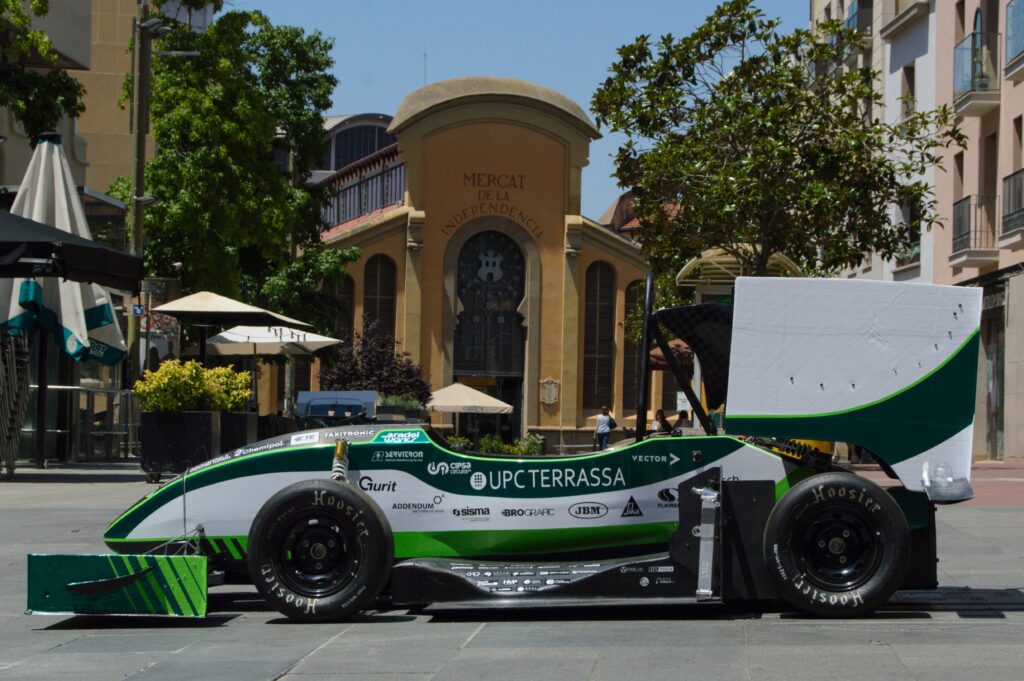
UPC ecoRacing is a student-led technological research association—comprising students primarily from the Polytechnic University of Catalonia in Terrassa (UPC – ESEIAAT)—dedicated to designing and manufacturing single-seater race cars to compete in Formula Student.
The project’s competitive and professional nature allows team members to significantly enhance their engineering training, providing them with technical and organizational experience that goes beyond classroom learning and connects them with cutting-edge techniques in the sustainable automotive sector.
Driven by passion and dedication, and a commitment to remaining at the forefront of technological innovation, UPC ecoRacing has established itself as the most successful team in the country.

A group of engineering students from UPC Terrassa formed an association with a goal that was as ambitious as it was simple: to bring sustainability to the automotive sector, at a time when no other team in the country had dared to venture beyond the well-trodden path of combustion engines.
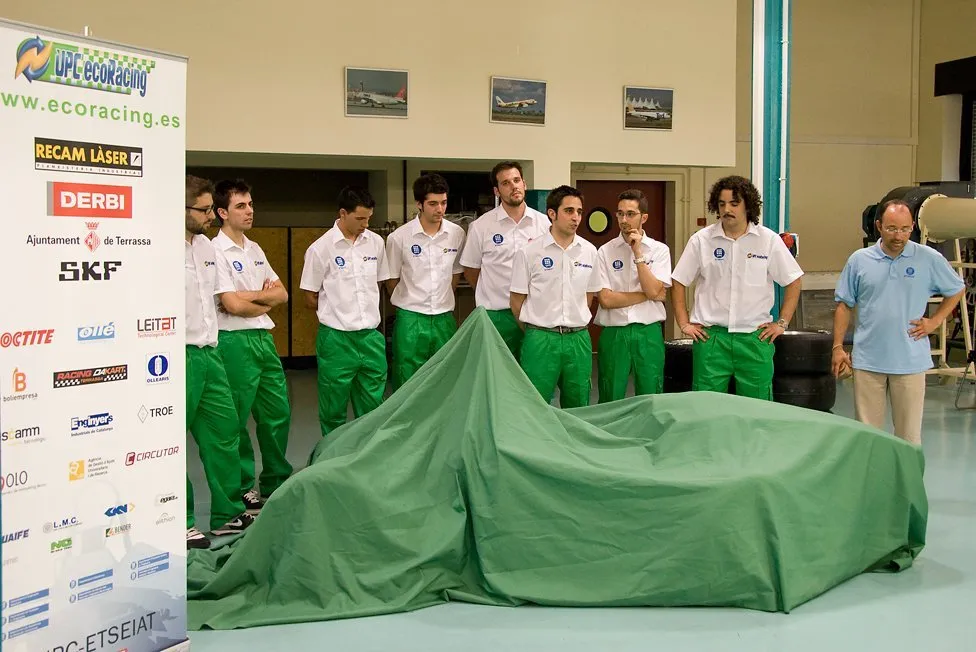
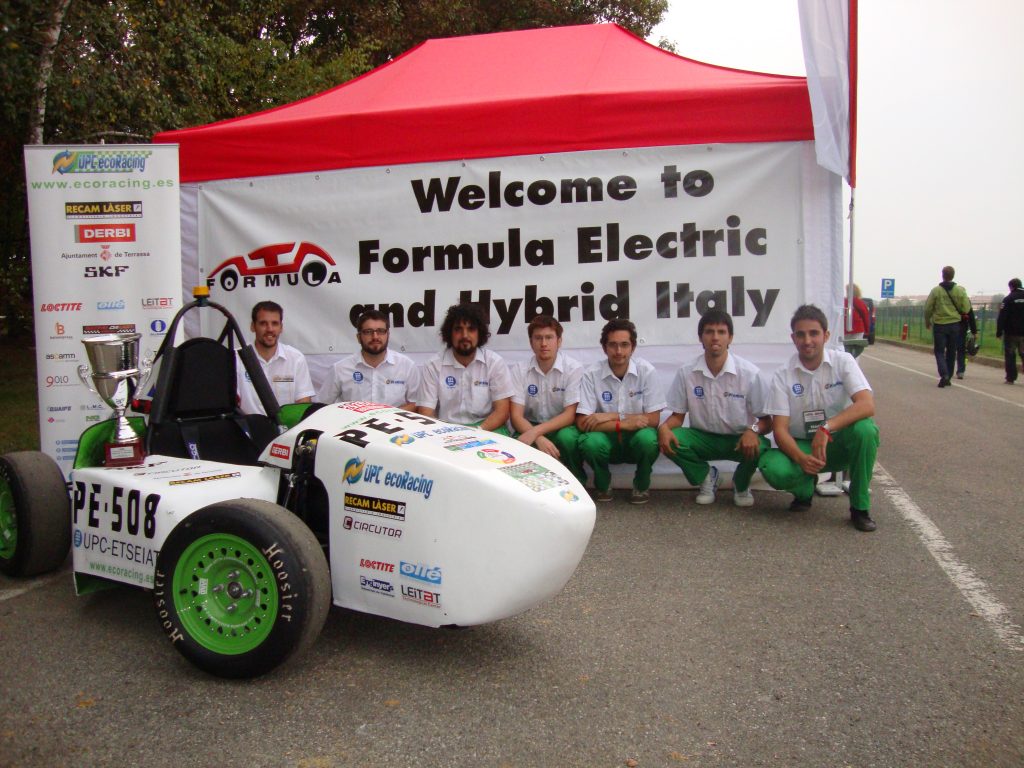
After two years of designing, manufacturing, and—above all—learning from scratch, on July 9, 2010, we unveiled our first car: the ecoR2. It was the first hybrid single-seater race car built in Spain.
Just weeks after its debut at Silverstone, the team secured a well-deserved second place at Formula Student Italy.
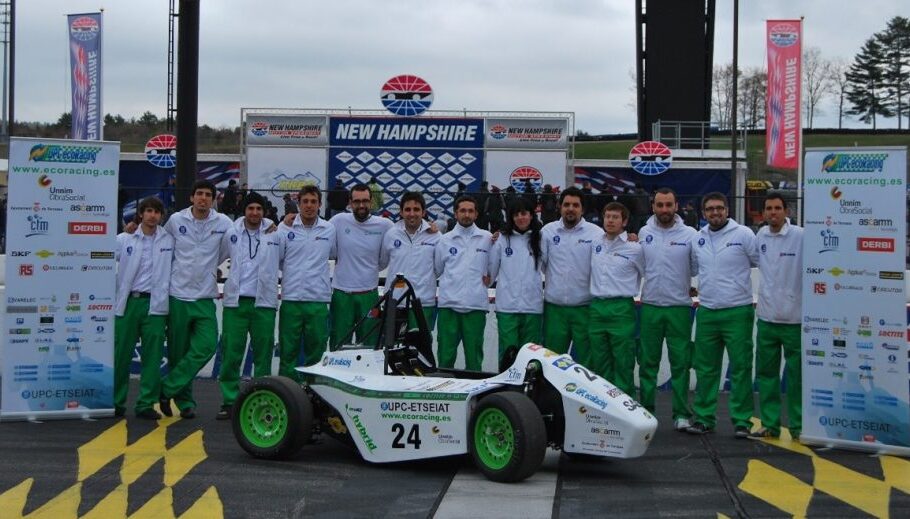
In 2012, UPC ecoRacing wrote a new chapter in its history by becoming the first team from Spain to compete outside Europe, and the first to do so on a North American circuit.
Participating in Formula Hybrid in New Hampshire (Boston, USA), the team exceeded all expectations and reached the podium by securing third place in the overall standings.
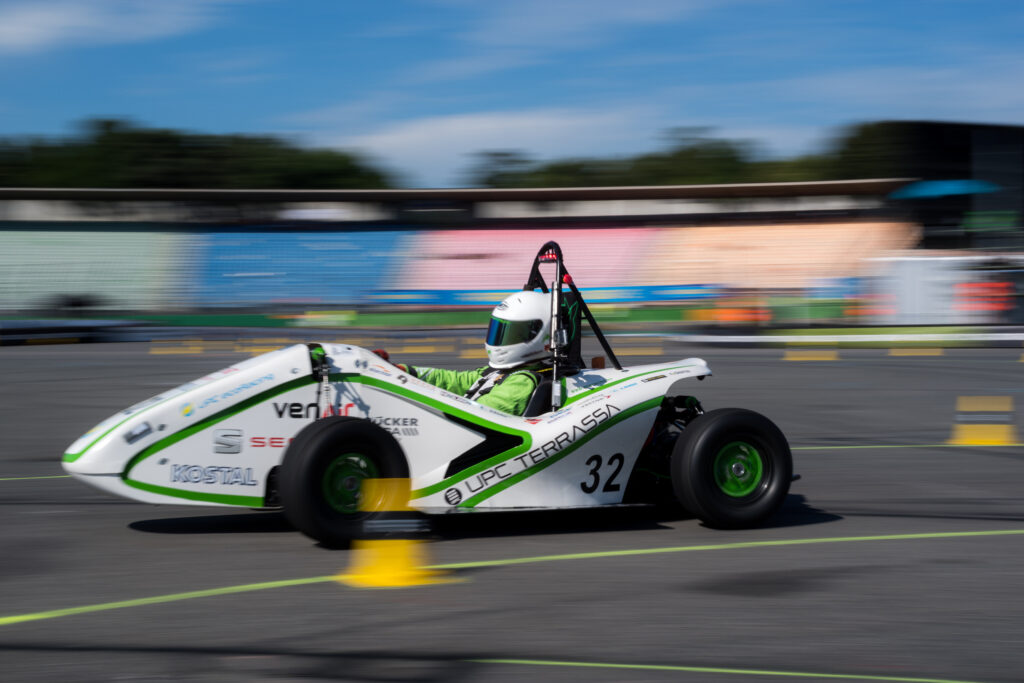
The team makes the leap to the 100% electric car with the ecoRZ and embarks on a streak of unprecedented success.
Becoming the first team in the country to reach the top of the podium, it wins the award for the most efficient car twice in a row, completes the endurance event in five consecutive competitions, and is recognized year after year as the best team in the country.
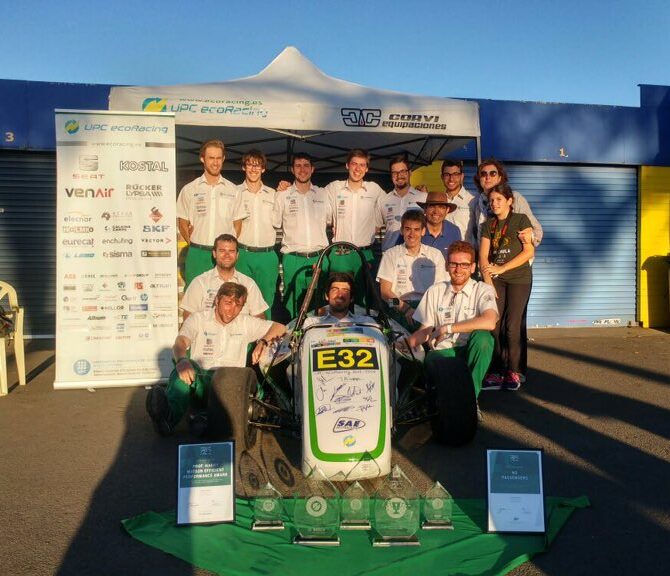
In 2017, UPC ecoRacing made history again by crossing the ocean, this time to Australia, where it was crowned champion of the electric category as the only European team present at the circuit.
UPC ecoRacing became the first team from Spain to win a Formula Student competition.
The outstanding performance of this concept propelled UPC ecoRacing into the top 7 of the Formula Student World Ranking List—the highest position ever achieved by a Spanish electric team.
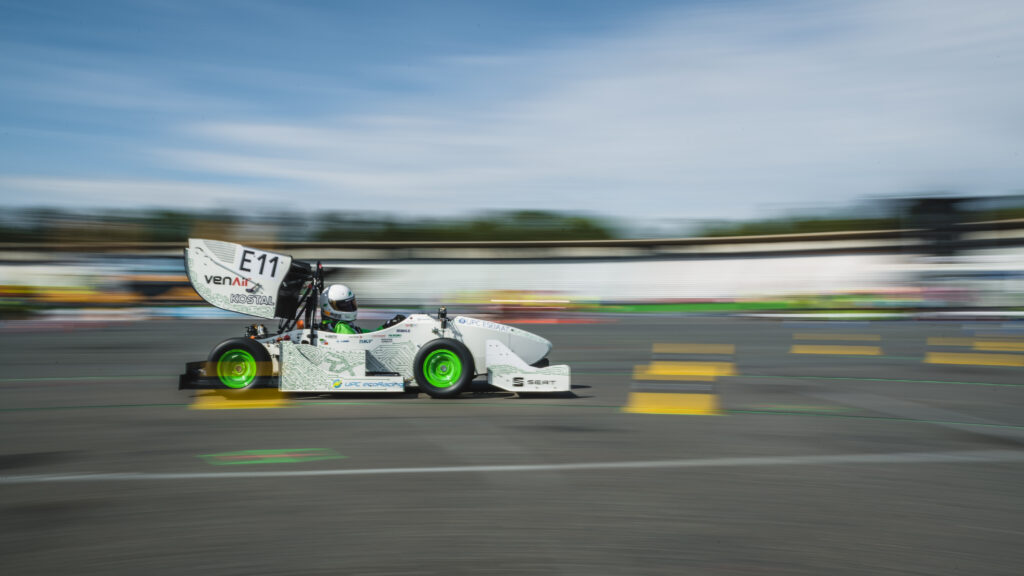
The team presents the ecoRX, the first electric single-seater in the country with four-wheel drive, marking the culmination of a full decade dedicated to innovation in sustainable mobility.
The new concept is technically groundbreaking: for the first time, the team incorporates a complete aerodynamic package and a carbon-fiber monocoque.
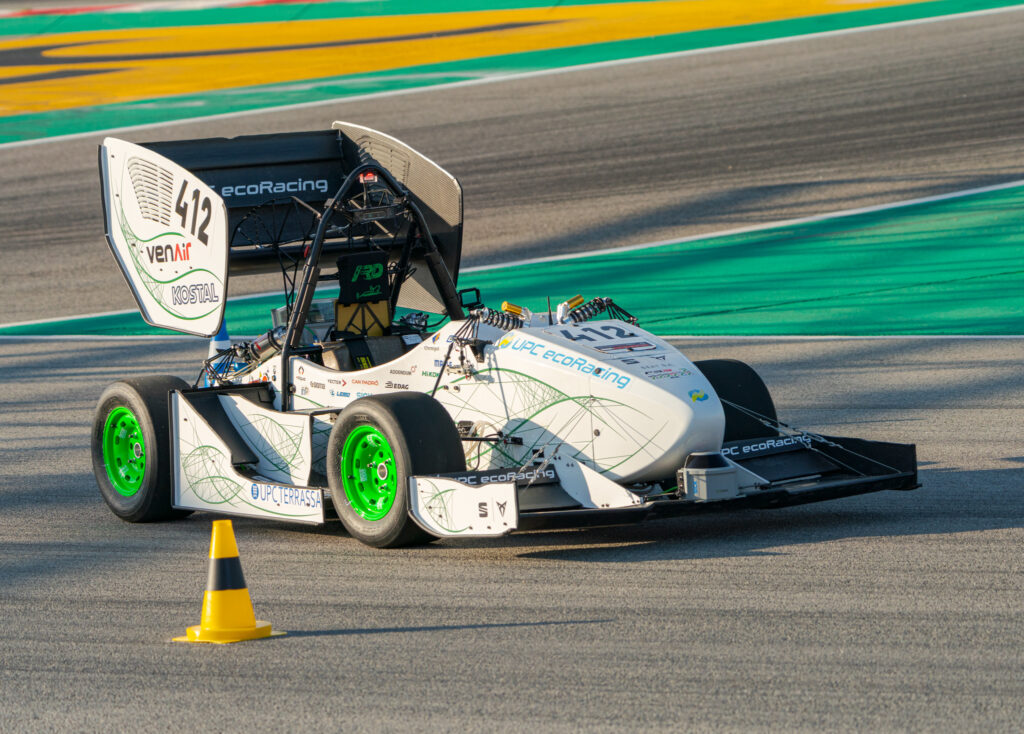
With the ecoRD, UPC ecoRacing has achieved its first-ever fully autonomous vehicle, becoming the first team in the country to combine manual and autonomous modes.
The team kicked off this new chapter by winning the Formula Student Switzerland competition and impressing with its driverless performance during its debut at Montmeló.
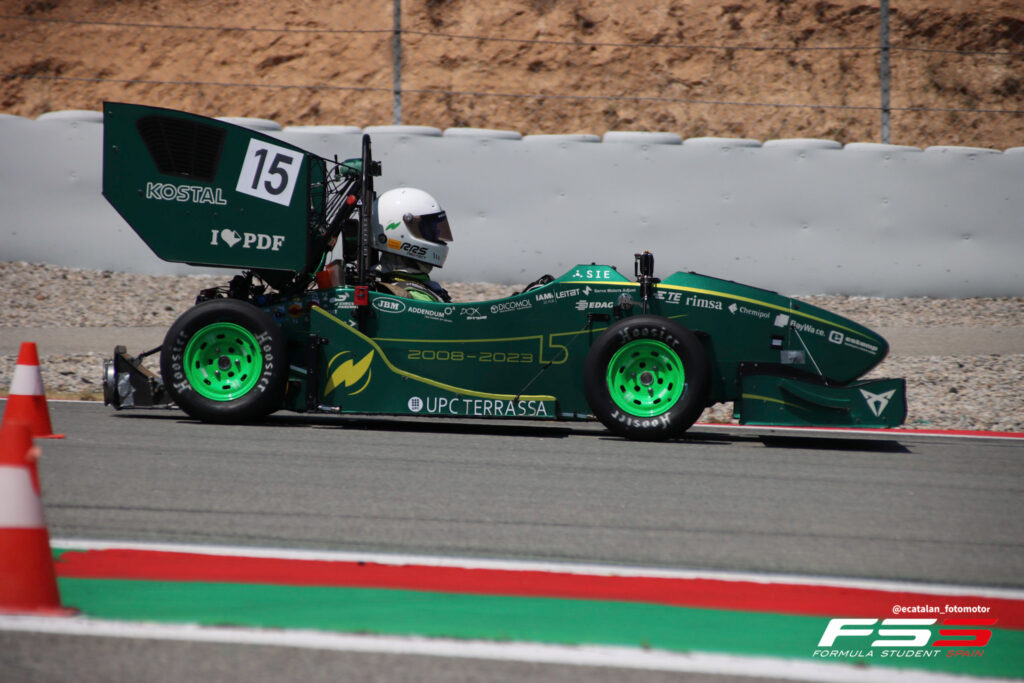
Coinciding with its 15th anniversary, the team is experiencing one of the best seasons in its history: 21 trophies in a single season.
A concept for looking towards the future.
UPC ecoRacing has 6 technical departments and 3 operations departments. Check the next slides to know more about each department!
The aerodynamics department is responsible for the design and manufacturing of the complete aerodynamic package of the car, consisting of a front wing, side wings, diffuser and rear wing. The aerodynamic design is carried out using CFD simulations to achieve the department’s main objectives: maximising downforce to improve cornering and reducing drag for better acceleration and speed. Finally, the aerodynamics department is responsible for the design of the vehicle’s cooling system. Fans are strategically placed to accelerate airflow and increase downforce.
The electronics department is responsible for designing 100% of the electronics in our single-seaters. The vehicle’s electronics comprise the Balance Management System or BMS, which balances the voltage of all the cells to optimise the performance of the battery pack, the lifeline safety systems, the reading of all the car’s sensors and the communication between the control unit and each of the car’s parts via CAN. The department also designs and manufactures all the wiring for both the low voltage power supplies and the communication cables to the control unit.
The dynamics department is in charge of the driver-vehicle interaction, developing a tyre model to not only push it to the limit in both stationary and transient conditions, but also to estimate the vehicle forces and correlate the track data. With the help of this model, they design and manufacture the vehicle’s suspension, consisting of: anti-roll bars, springs and shock absorbers. These are exclusively designed to extract the maximum potential from the tyre in each cornering phase, taking into account the vehicle’s characteristics and Torque Vectoring. Finally, they are in charge of vehicle tuning before each dynamic test, analysing the data collected to allow the vehicle, and the driver, to maximise its performance on the track.
Within the frame department, they are in charge of the design and manufacture of the monocoque chassis of our single-seaters, composed of carbon fibre and aluminium honeycomb in a sandwich structure. To ensure the rigidity of the monocoque chassis, they carry out different structural simulations as well as mechanical tests of the different laminates that make up the vehicle in order to obtain a correlation with the final laminates. The chassis department is also in charge of the ergonomics of the driver and the vehicle, designing the natural fibre seat, steering wheel and pedals to allow maximum comfort for the driver.
The powertrain department is responsible for providing traction to the single-seater thanks to the four-wheel drive concept, i.e. an independently controlled engine at each wheel. This concept, together with Torque Vectoring, allows our cars to reach higher cornering speeds. The department is also responsible for the design and manufacturing of the high-voltage battery pack, which stores all the electrical energy needed to propel the vehicle. To optimise the design, tests are carried out with different types of cells used in the global electric automotive industry. Finally, in order to be able to supply the high power density motors used in our vehicles, we are studying current inverters capable of converting the direct current of the battery pack into three-phase alternating current.
The Driverless department works on transforming the car into a 100% autonomous vehicle with three sub-departments. The perception module develops codes, including a neural network, for processing data from cameras for a comprehensive view of the vehicle's surroundings. This data is used by the estimation module to estimate the position of the car and determine the path to follow. The control module then utilizes the data from estimation and perception to generate optimal wheel torque and roll angle instructions.
The accounting department is in charge of the accounting of the team, whether it is by keeping an updated list of the data or by foreseeing all those moments of the season when a certain amount of resources will be needed or another. They are also in charge of the association’s accounts and the legal issues related to them. An example of the work that is carried out in this department is the control of the fluctuations of the economic resources and the balancing of everything in order to be able to maintain them throughout the season. They are also in charge of preparing the Cost Event during the competitions.
The members of the logistics department are responsible for the organisation of the team and the management of the work spaces, i.e. the workshop or the spaces at the university to ensure that they are in optimal working conditions. In addition, the department is responsible for all movements of people and objects throughout the season, whether it be attending events or travelling to competitions. A good example of the department’s work can be at competition time, when it has to take into account everything from transport to go to the circuits to keeping the members’ documentation up to date, managing all the material to be able to compete and organising the tasks of all the members of the team for correct coordination.
The marketing department’s main task is to obtain the necessary resources to be able to design and manufacture each of the team’s single-seaters. On the other hand, it is in charge of the team’s public image and its repercussion. They carry out different tasks such as managing social networks, with which they attract the attention of different audiences: both for new members for the coming seasons and for new companies that want to collaborate with the team. In addition to the social networks, we contact different technological fairs and events to expose the project to a more specific public. Moreover, in this department we can also find the members in charge of grants, graphic design and maintenance of the team’s website, as well as the Business Plan during competitions.
