
Mvtec 2022-2023 collaboration

Thanks to the support from MVTec Software GmbH, our team has significantly improved the performance of our autonomous vehicle, achieving millimeter-level precision in our camera parameters. This accomplishment was made possible through the use of HALCON software and their calibration plate.
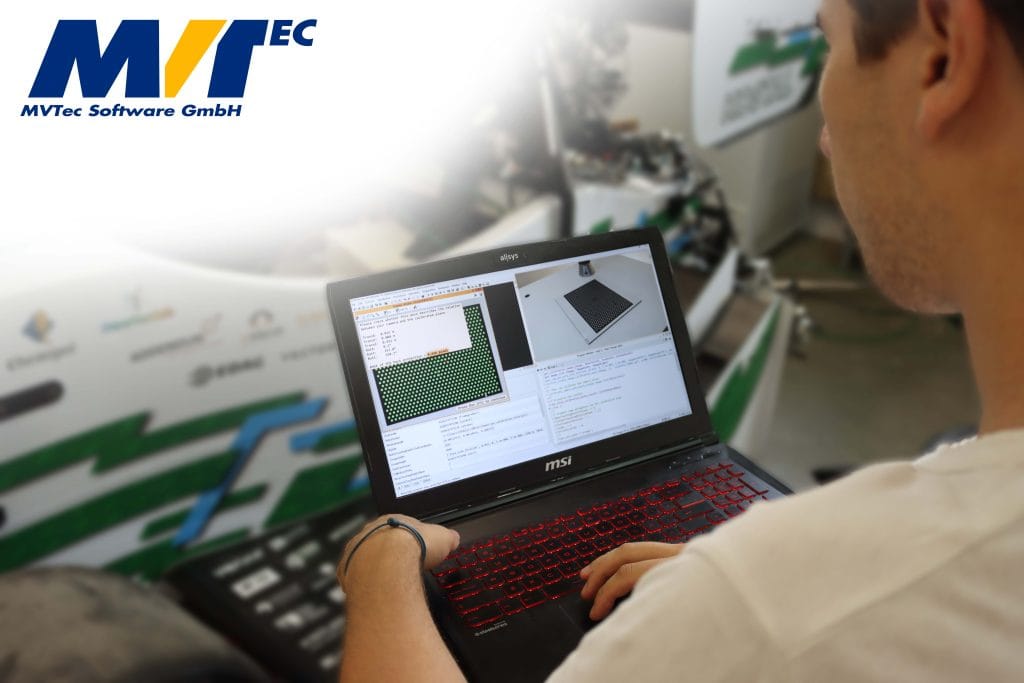
The introduction of MVTec software has significantly improved the calibration process for our cameras. Previously, we relied on the OpenCV library integrated with ROS to detect corners of a chessboard pattern in images, which often resulted in inaccuracies and required multiple calibration attempts, consuming over 200 images for each set of parameters.

With MVTec’s software and the high-precision calibration plate provided, designed to achieve millimeter-level accuracy using a grid of circles, we have achieved more precise camera calibration in a shorter time and with a smaller amount of images, significantly enhancing the accuracy and efficiency of the process. For an insight into the calibration’s precision, the Halcon software is capable of determining the sensor’s cell width with micron-level accuracy.

To obtain these parameters with Halcon, we required approximately 8 to 10 images per camera. This led us to question what the relative error might be using the OpenCV library, when compared to the results achieved using 200 images, if we were to attempt to obtain camera parameters with a range from 1 image to 10 images. It’s important to acknowledge that the OpenCV library’s accuracy is not on par with the parameters obtained using Halcon software, which means that the ground truth in this test may contain inaccuracies when compared to the results obtained with MVTec software.
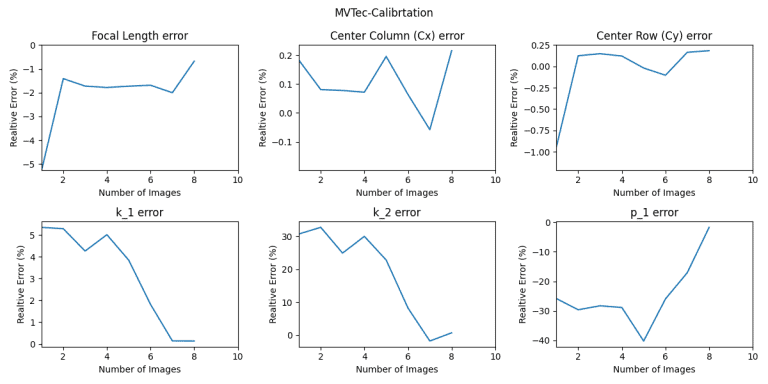
Figure 1. Relative error using MVTec software
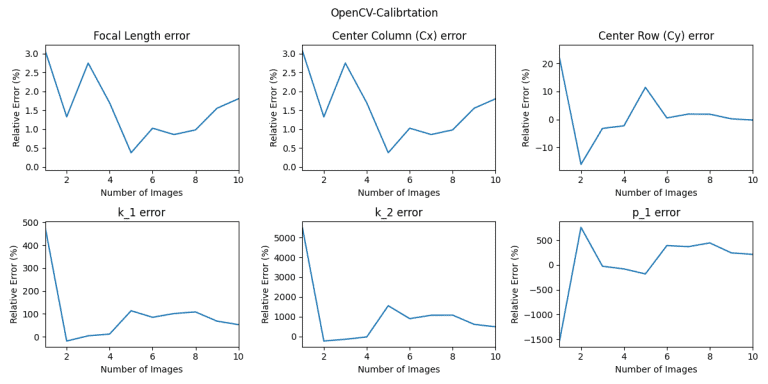
Figure 2. Relative error using OpenCV

From the last figures, we can establish that with less images, the MVTec software is capable of giving more similar values, related to the ground truth, than the OpenCV library. Therefore, the Halcon calibration is a more reliable process.

We are sincerely thankful to MVTec for giving us the opportunity to take advantage of HALCON’s exceptional capabilities this season, and we look forward to maximising its potential in the seasons to come.

Mvtec 2022-2023 collaboration

Thanks to the support from MVTec Software GmbH, our team has significantly improved the performance of our autonomous vehicle, achieving millimeter-level precision in our camera parameters. This accomplishment was made possible through the use of HALCON software and their calibration plate.

The introduction of MVTec software has significantly improved the calibration process for our cameras. Previously, we relied on the OpenCV library integrated with ROS to detect corners of a chessboard pattern in images, which often resulted in inaccuracies and required multiple calibration attempts, consuming over 200 images for each set of parameters.

With MVTec’s software and the high-precision calibration plate provided, designed to achieve millimeter-level accuracy using a grid of circles, we have achieved more precise camera calibration in a shorter time and with a smaller amount of images, significantly enhancing the accuracy and efficiency of the process. For an insight into the calibration’s precision, the Halcon software is capable of determining the sensor’s cell width with micron-level accuracy.

To obtain these parameters with Halcon, we required approximately 8 to 10 images per camera. This led us to question what the relative error might be using the OpenCV library, when compared to the results achieved using 200 images, if we were to attempt to obtain camera parameters with a range from 1 image to 10 images. It’s important to acknowledge that the OpenCV library’s accuracy is not on par with the parameters obtained using Halcon software, which means that the ground truth in this test may contain inaccuracies when compared to the results obtained with MVTec software.

Figure 1. Relative error using MVTec software

Figure 2. Relative error using OpenCV

From the last figures, we can establish that with less images, the MVTec software is capable of giving more similar values, related to the ground truth, than the OpenCV library. Therefore, the Halcon calibration is a more reliable process.

We are sincerely thankful to MVTec for giving us the opportunity to take advantage of HALCON’s exceptional capabilities this season, and we look forward to maximising its potential in the seasons to come.